At a glance
- Choosing the right cheese from the start protects your consistency, margins and kitchen workflow.
- Melt performance matters more than pack price when it comes to delivering a reliable burger.
- Matching your cheese slice size to your burger build reduces waste and improves presentation.
- Pre-sliced, fixed-portion cheese keeps portioning consistent across every staff member and every shift.
- A dependable cheese supplier ensures your product standard stays the same as your business grows.
Launching a burger business requires careful planning around recipes, branding and customer experience. Once service begins, maintaining operational consistency while keeping the cost under control becomes an ongoing challenge.
One of the most overlooked operational decisions in a burger startup is cheese selection. Beyond flavour, cheese influences consistency, assembly speed, presentation and long-term cost management. For a growing burger business, getting this right from the start saves you from costly and avoidable problems down the line.
This blog offers a practical approach to choosing burger cheese that supports product consistency and gives startups greater control over costs.
Why Choosing the Right Cheese Matters for Burger Startups
While most burger startups prioritise their patty blend and overall menu concept, cheese selection often gets left as an afterthought. That gap tends to show up fast once high-volume service begins.
Here are the key reasons why selecting the ideal cheese matters far more than most new operators anticipate:
- Consistency Across Every Burger: When cheese melts evenly and covers the patty the same way every time, your customers receive a consistent product regardless of who is working the grill. When you are building a reputation from the ground up, that consistency is what keeps customers coming back.
- Better Cost Control: Fixed slice weights and dimensions remove the guesswork from portioning, which means less overuse, less waste and more predictable food costs across every service. For a startup managing a tight food budget, predictable cheese costs make it easier to track margins and plan purchases accurately.
- Faster Kitchen Workflow: Cheese that melts reliably under heat means your team spends less time monitoring the grill and more time moving orders through the line. This reliability lets kitchen staff focus on speed and execution rather than dealing with an ingredient that behaves differently each time.
- Easier Staff Training and Scaling: Standardised cheese portions mean any new team member can assemble a burger correctly from their first shift with minimal instructions. As the business grows and service volume increases, that repeatability becomes one of the most valuable qualities a kitchen ingredient can offer.
Read More: Train Your Kitchen Staff to Consistently Handle Hi-Melt Cheese for Optimal Results
What to Consider When Choosing Cheese for Your Burger Startups
Understanding what to look for in a burger cheese can save a new business from costly and avoidable operational problems. The following considerations are worth examining before committing to any supplier or product:
Choose Cheese With Consistent Melt Performance
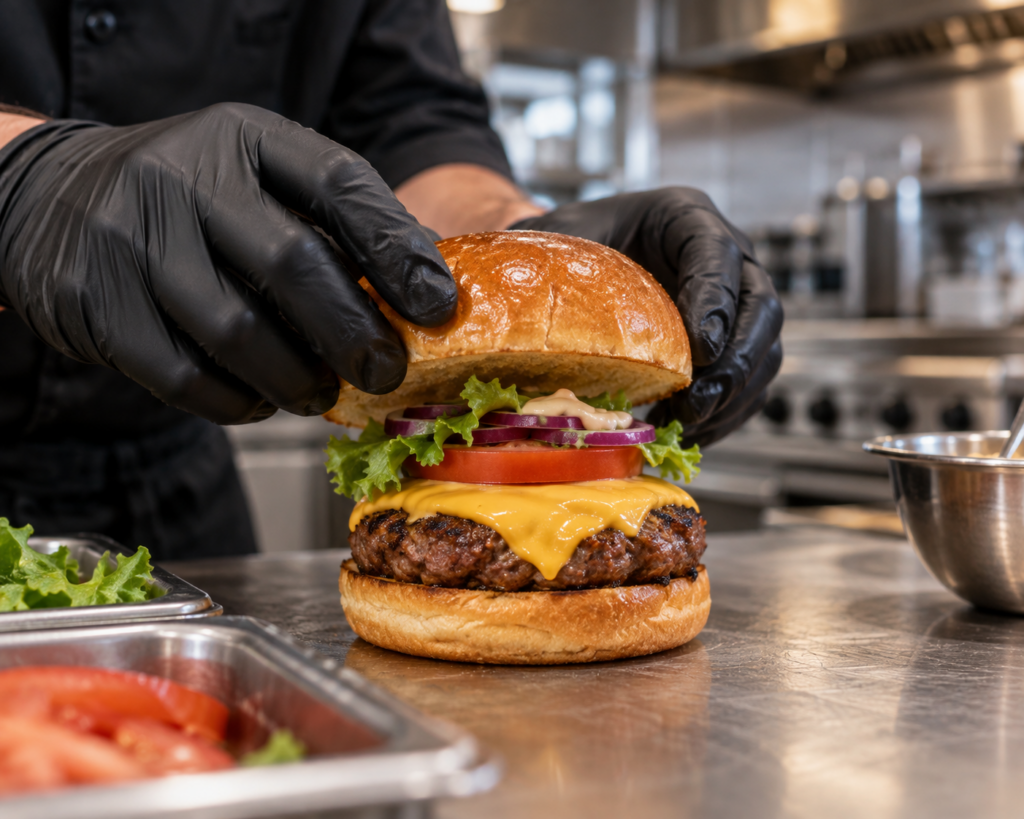
Melt performance is one of the most practical signs of whether a cheese will work well in a professional burger kitchen. A cheese that melts unevenly means one burger could look perfectly finished while the next comes out with bare patches. For startups trying to build customer trust, those inconsistencies can quickly affect the overall experience.
When the melt is reliable, the flavour comes through evenly in every bite, and the finished burger has the kind of colour and coverage that looks intentional. It also helps every order maintain the same overall presentation.
HI-Melt cheese from The Burger Cheese is specifically designed to cover the patty evenly and consistently, every single service. This gives you a dependable result across every service, which matters most when you are still building your customer base.
Read More: Why Consistency Matters When Choosing Cheese for Your Menu
Match Slice Size to Your Burger Build for Consistency
Choosing the right slice weight for your specific burger build is one of the most practical decisions you can make early on. Using the wrong slice size affects how the burger looks on the plate and how consistently it offers a satisfying eating experience from one order to the next. Matching cheese slice weight to the specific burger build is a practical decision that supports product consistency.
Different formats, from smash burgers to loaded burgers, require different melt coverage and layering. Choosing the right slice weight from the beginning reduces cheese over-portioning, improves presentation and helps maintain a uniform result across the entire menu.
HI-Melt burger cheese is available in four sizes to suit different burger builds and kitchen needs:
- 96 slices, 23.5g per slice
- 120 slices, 18.9g per slice
- 160 slices, 14.2g per slice
- 200 slices, 11.3g per slice
Having the right size available means you can build your menu around a cheese that suits the scale, format and melt requirements of each burger.
Use Pre-Sliced Cheese to Reduce Operational Cost
When orders are coming in fast, speed and accuracy are non-negotiable. Pre-sliced cheese removes the need for manual cutting, which reduces preparation time and keeps the assembly process straightforward for every member of the kitchen team.
Imagine a busy Friday night when your kitchen staff assembles 30 burgers in under an hour. You cannot afford to slow down over a step as simple as portioning cheese. Having individually separated slices ready means one less factor that could disrupt the service speed.
In addition to saving time, pre-sliced cheese with fixed portion sizes helps maintain uniform burger builds throughout every shift. When every slice is a fixed size, portions stay consistent across your whole team, which keeps food costs predictable shift to shift. Reducing manual handling also lowers the chances of product damage, cross-contamination and unnecessary waste. All these factors contribute to better control of burger cheese costs over time.
Think Beyond the Lowest Price to Improve Cost Control
Comparing cheese options by pack price alone rarely reflects what that cheese is actually costing your business per burger. What a cheese costs per carton and what it costs per burger are often two very different numbers.
A cheaper cheese that melts inconsistently or requires extra slices to cover the patty properly will quietly push your food costs up across every service. For a startup running 200 burgers a day, even half a slice of overuse per burger adds up to a significant margin loss by the end of the week. Choosing a cheese based on consistent portion performance and reliable melt behaviour helps keep food costs predictable. This becomes important as the business grows and operations scale.
Choose a Supplier That Can Support Consistent Operations
Most operators only start thinking seriously about supplier reliability after they have already run out of stock mid-service. Running out of stock mid-service or receiving a product that performs differently from the usual supply creates immediate problems for consistency and kitchen workflow.
Uniform product specifications across every delivery matter as much as the cheese itself. Every delivery should match the same slice weight, melt behaviour and flavour profile so you can maintain the standard your customers expect. Reliable supply also makes ordering burger cheese in bulk more manageable and helps keep food costs stable as order volumes grow.
Getting your cheese selection right might not feel urgent in the early days, but it has a direct impact on your consistency, your kitchen efficiency and your margins. Consistent melt performance, correct slice sizing, reliable portioning and dependable supply all contribute to a business that delivers the same quality burger every single service.
The startups that get this right early are the ones that scale without having to rebuild their kitchen processes from scratch.
For burger startups serious about quality and cost control, The Burger Cheese provides HI-Melt cheese specifically designed for professional burger kitchens. Get in touch with our team today at info@puredairy.com or +61 3 9939 4000 to discuss foodservice cheese solutions for your kitchen.
FAQs
How can burger startups test different cheese options before finalising their menu?
Burger startups can request samples directly from suppliers before committing to a bulk order. During testing, evaluate melt performance, flavour consistency and visual presentation across different burger formats.
Does cheese choice affect takeaway and delivery burger quality?
Yes, a cheese with poor melt stability loses its texture and appearance quickly once the burger is packaged. Choosing a cheese specifically formulated for burger applications, such as a HI-Melt slice, helps maintain better coverage, texture and presentation during transit.
How often should burger startups review their cheese portions and food costing?
You should review cheese portions weekly to catch waste and overportioning early. Overall menu profitability and food costing should then be audited monthly or quarterly to identify any cost increases before they begin to affect margins meaningfully.
What should you avoid when choosing cheese for a burger menu?
Avoid selecting cheese based on pack price alone. Inconsistent melt performance, poor portion control and unreliable supply are common pitfalls that affect quality and margins. For a more detailes, read our blog on mistakes to avoid when choosing burger cheese for your menu.
How can burger startups maintain consistent cheese melt across different cooking equipment?
Consistent cheese melt comes down to two things: using a cheese formulated for high-heat burger kitchen environments, and applying it at the right moment during cooking so it has enough time to melt fully before the burger is assembled and served.